|
See below: The Song of Songs, 2002
2014
The FELT days 267, 268, 269, 270 ~ of the next 15 FELT years [see
linear time-line]
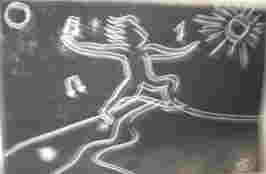 |
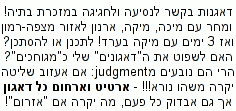
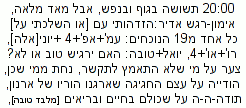
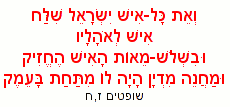
1 5 y e a r s = 5 4 8 0 days of g e f u e h l t e - g e f u e l l t e Z e i t "inmitten der Ewigkeit", f e l t - f i l l e d t i m e "amidst eternity" from the beginning of my 76th till the completion of my 90th year [unless I'll die after all] The feeling chosen from a day is exhibited in max. 7 lines per day since August 28, 2013 Since March 25, 2014, the only documentation of my life is distilled in "Felt Days"!! My role in the manifestation of the Tent-Vision is implied in the biblical tent quote! Since April 10, I sculpt "Felt Day" in Hebrew, prepared for and inserted as ".png". Names in "Felt Days" appear on top in English, so they can be found in "Search" |
 |
|

| More
on my next Felt Day in The
1999Plan for Twin Ohalah-Rihlah |
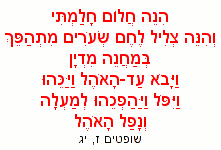
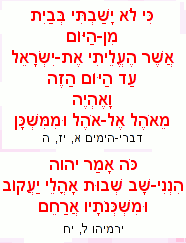
June 1, 2014 - OHEL 115 from among its 365 appearances in the Bible
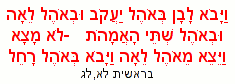
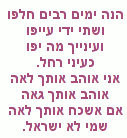
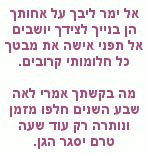
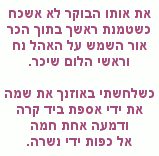
Only now I realize, that the very name of Lea, whose TENT appears twice here , is "Ohel", if one turns the letters - lamed-alef-hê - around. I sense the mystical depth of this name, which - in another order of these 3 consonants - becomes either "HA-EL = the God, or GOD", or "ELAH=Goddess", who is "the Shekhinah", or --- in Godchannel.com (see pp39 Deity) - "The Mother", or "The Will" or "My Desire" "The Will" or "the Feeling-pole" was, indeed, handled by "the Spirit-pole", like Lea was handled by her father and by her husband. No wonder, that her name - an adjective that later meant "tired, fatigued, exhausted" - is derived from the verb "lamed-alef-he"= "c a n n o t " (s. Jeremiah 20:9 "ve-nil'eti kalkhel")
|
|
 |
|
 |
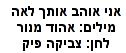 I love you, Lea, lyrics: Ehud Manor [of course! who else!] tune and performance: Zwicka Pick It was Mika, who let me know this song, when I was with her the last time, I dont remember why. "But I hate the image", she said, and covered it with her hand. I like it better than the video of a 2014 performance |
More about the metaphor of the Ohel
| "What
are your associations when you think of an Ohel",
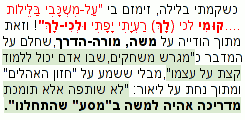
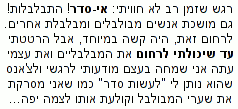
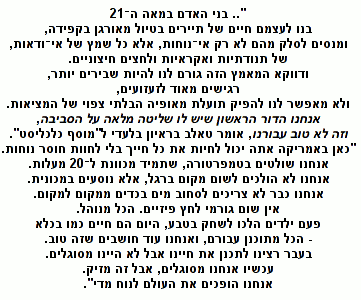
I asked Moshe. "Abraham Avinu", he said, "and a tent open into 4 directions". "What does it mean for you", asked Lior, "open into 4 directions?" I don't remember his answer to this, but I remember, that he, as Lior, understand, that the Ohel symbolizes the concept of "lekh-lekhâ"/"lekhi-lakh", which means according to them - the readiness "to leave our comfort-zone, and that's what we now decided to do." Right after they were gone, I read in a mail from "The Wander-Gatherers", that there is a Lebanese-born USA writer Nassim Taleb, [Hebrew] "whose work focuses on problems of randomness, probability and uncertainty". I'll insert only what they quote from a special interview with the "Calcalist" because it's only this passage which "touches" the biblical concept. This concept has taken roots in me, far-reaching roots in my ground.... Also - dear Nassim Taleb - if humans do not learn how to feel = vibrate & womb their anxiety, they will not leave their comfort-zone, they will not risk their endangering "security" and "safety".... |
 |
 |
June 2, 2014 - OHEL 115 from among its 365 appearances in the Bible
the more so as the metaphor of total bedlam and chaos fits my own dream tonight, though its meaning is much less dramatic. As so often "ohel" stands for an entire tribe and not only for its physical dwellings: it is slown, it turns upside down, it falls.
|
Tomorrow , Monday June 2, 2014, at 9 am, the Supreme Court in Jerusalem will hear the appeal of the heirs of Sheikh Suleiman Al-Ukbi regarding the right of ownership of land at Al Araqib and Zazhilika, northwest of Be'er Sheba. The panel including Justices Elyahim Rubinstein , Esther Hayut and Salim Jubran will deliberate on an appeal of the ruling of Judge Sarah Dovrat of the Be'er Sheba District Court , who had ruled against the heirs. Nuri al-Ukbi , a veteran Bedouin rights campaigner who is one of the appellants, said : "In 1951, members of my tribe were expelled from their village and lands in Al Araqib , and deported by force to Hora, about twenty kilometers to the east, close to the then border with Jordan. The authorities in the State of Israel used methods of intimidation and fraud in order to justify the criminal deportation of civilians from their homes and lands."
|
Documents
and written history prove that Araqib was a place of residence
and cultivated land of the al-Ukbi Tribe for generations , ever
since the days of the Ottoman Empire , and they still lived there
during the first four years after the establishment of Israel.
As a citizen of Israel, Sheikh Suleiman Muhammad al-Ukbi voted
in the first elections to the Israeli Knesset (Parliament) in
1949 , the ballot box being placed at his residence in El Araqib.
The same residence served every Monday and Thursday as the venue
for a Tribal Court, acting under authorization of the State of
Israel and sitting with it National Flag and State Emblem displayed.
Then, the state suddenly turned on its Bedouin citizens and violated
their basic rights, solely because of their ethnicity, and in
1951 expelled them mercilessly from their land. We have appealed
to the Be'er Sheva District Court, seeking justice - and were
rejected. We hope that the Supreme Court will now redress this
long-lasting injustice.” The importance of the deliberations goes beyond the specific question of ownership in the lands of Araqib Village, which in recent years has become a symbol . Success of the appellants can also affect hundreds of other land disputes between the state and the Bedouin, ... |
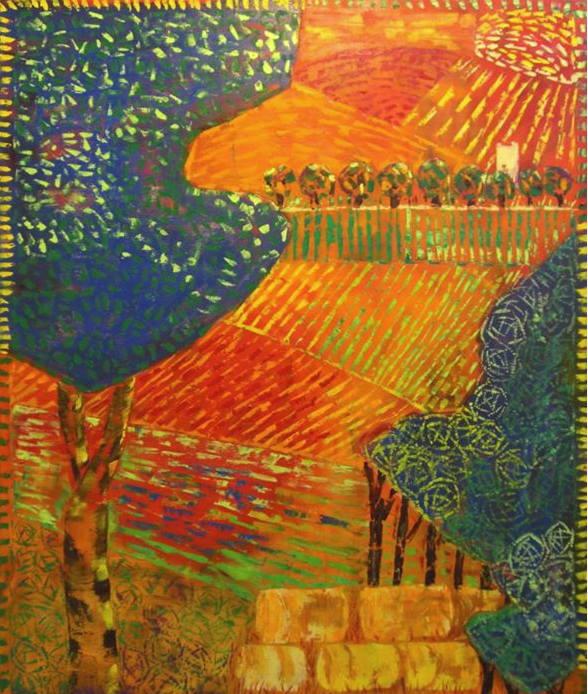
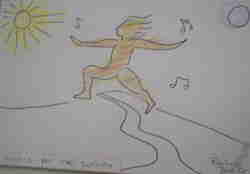
Dita, my stepdaughter, posted this painting on Facebook, noting: "on the way to an exposition in Munic".
It made me think - and perhaps I - in time - shall dare to ask her:
' will the time come for you to paint the desert or even to simulate the Tent-Vision?'
See her album on Facebook
June 3, 2014 - OHEL 116 from among its 365 appearances in the Bible
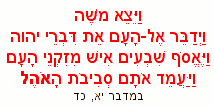
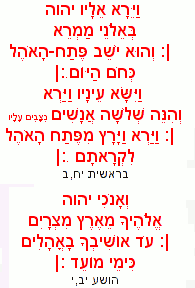
And then he finds 70 partners (or at least believes that he finds, for I can't see that they are helpful as the story continues). See my song! What I pay attention to for the first time, is, that those 70 partners begin their assignment by standing around the TENT of APPOINTMENT!
|
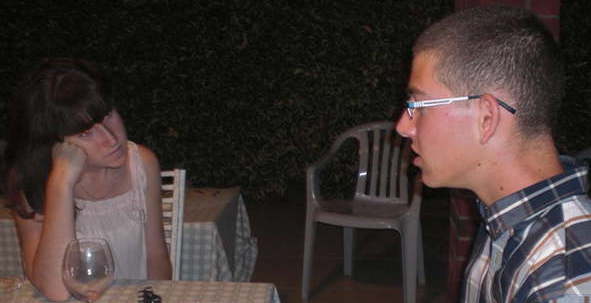
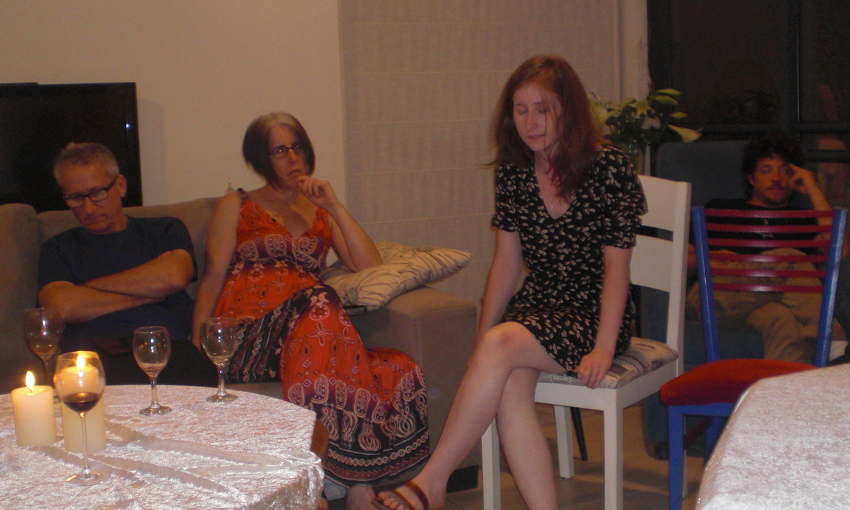 Uri, left of Ronnit, and Tomer, right of Rotem, never make an effort to communicate, but at least they are present with the rest of the family |
 |
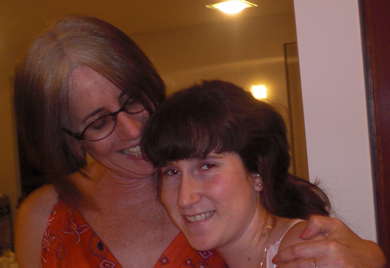 Yael knows how to listen to Arnon. Yael will have to learn, to make her family listen also to her. |
June 4, 2014 - OHEL 117 picked by Mika from among its 365 appearances in the Bible
|
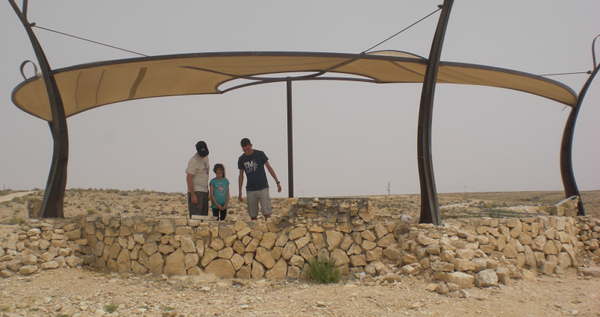 |
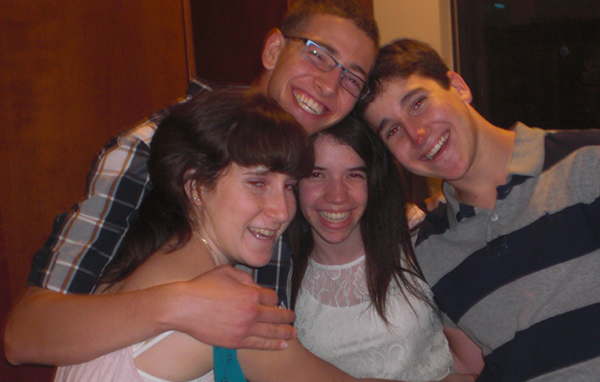
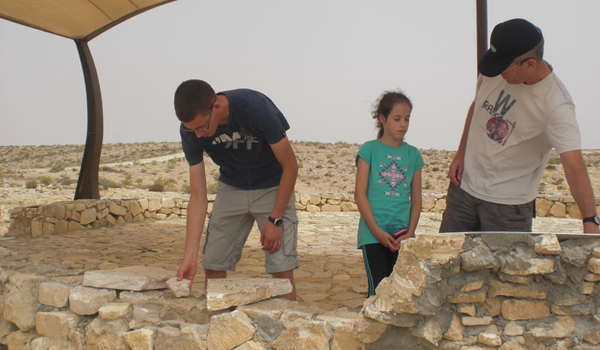
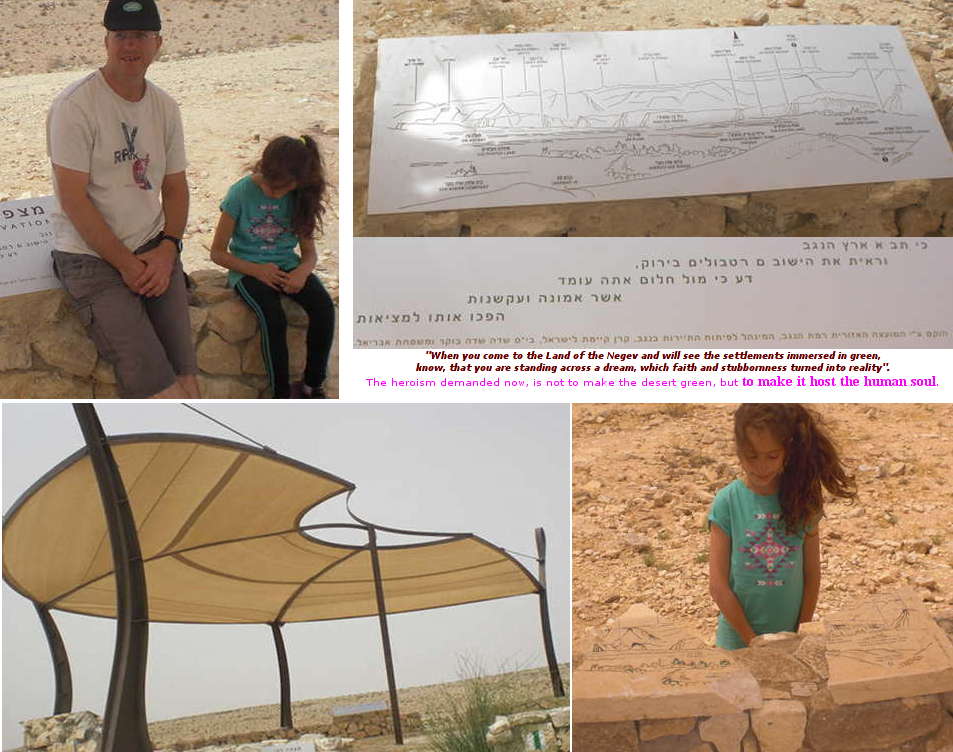
An unusual composition of 4 family-members |
Mika
didn't look at the engraving in metal of all the mountains and places
that could be seen from there, but explored the broken map engraved in stone, which obviously had served the visitors earlier . She wanted to make the pieces fit together, lifted a stone much too big for her, and placed it on the ground. Unfortunately Micha told her to put it back on the wall, and when she did so, one of her fingers was squeezed between stone and wall. Later she and I said, that it could have been much worse - the squeezing - but it was enough to make her not only cry but be in a sad mood when we traveled on. Though all three of us tried to comfort her, she said - when we were alone at Arad in the evening: "None of you really cared!" "What!! None of us really cared?" "No, you only listened, and Micha just stood there with his hands folded! He probably felt guilty!" |
 |
|
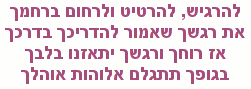
I want you to enhance and to
not distort, |
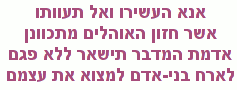
| More
on my next Felt Day in The
1999Plan for Twin Ohalah-Rihlah |
2002
|
The
Song of Songs |
Shabbat, 2002_10_26; last
update: 2005_07_28 --- see a sadly relevant addition on 2009_01_13- at the
end of page 3
This is the day of the lethal liberation
of over 700 Russians and foreigners,
who had been taken hostage in a Moscow theater by 50 Chechen men and women,
who wanted to end the "Russian Vietnam" of 10 years and get their
independence -
a liberation which cost the lives of 50 rebels and 117 hostages.
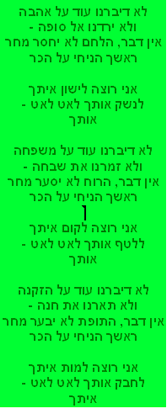 |
We
haven't yet talked about love We
haven't yet talked about family We
haven't yet talked about old age |
|
A man shits outside the three fences, but Chagall's
lovers fly above all three, the town, the fences and the shitter.
|

While working on converting
my book into web pages,
which means for me to re-read for the first time , what I wrote from 1967-1982,
I was again deeply moved by the "parentalness"
of Israel's
Sages for the catastrophic cataclysm of Israel between 70 and 133 A.D.
The most controversial sage was
Rabbi Aqiba,
who hailed the "Son-of-Deception" (Bar Koziba instead of Bar Kochba)
- seen by his colleagues as the instrument of that holocaust of 133 A.D.-
- as the Messiah,
and - died for it as a martyr,
but who also evolved the image of "God" into THE LOVER
and the relationship between God and Israel into one of LOVE BEYOND DEATH,
thus giving his dejected and humiliated people a reason to be proud and self-loving
in the face of harsh
judgments from their surroundings.
Rabbi Aqiba was an illiterate day laborer until the age of 40,
when his wise wife, Rachel, made him start studying.
Rabbi
Aqiba believed ,
that the Song of Songs was more important even than the Torah.
I vacillate between raging at Aqiba and adoring Aqiba,
between raging at my Jewish people for its potential to destroy itself again
and revering my Jewish people for its potential to be the master of its destiny.
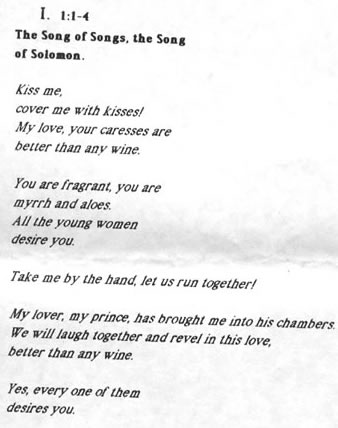
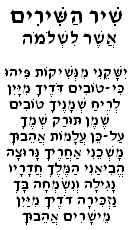
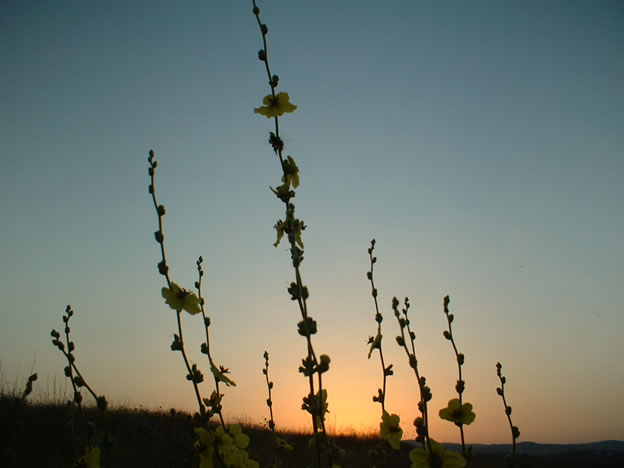
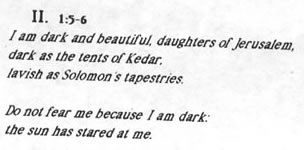
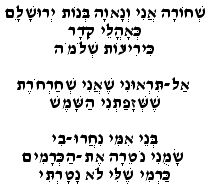
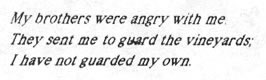
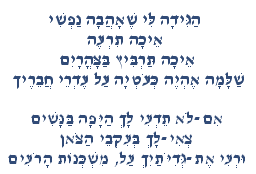
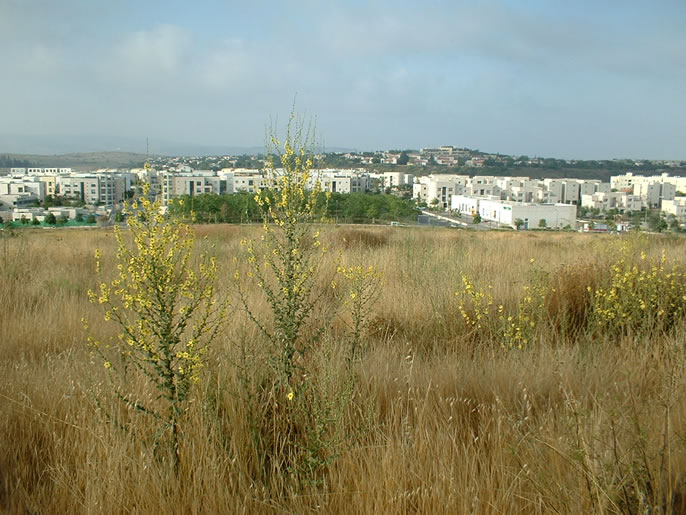
This sculpture was stimulated by both,
R. Aqiba's delight in the Songs of Songs
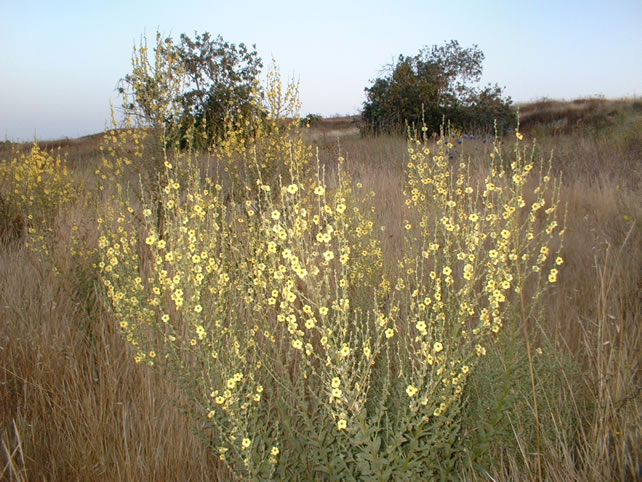
and my continuous joyous experience on my
Modi'in Hill,
that place, where Jewish rebellion started 300 years earlier.
|


 |
 |
 |
|
|
|
 |
 |
|
 |
 |
 |
 |